
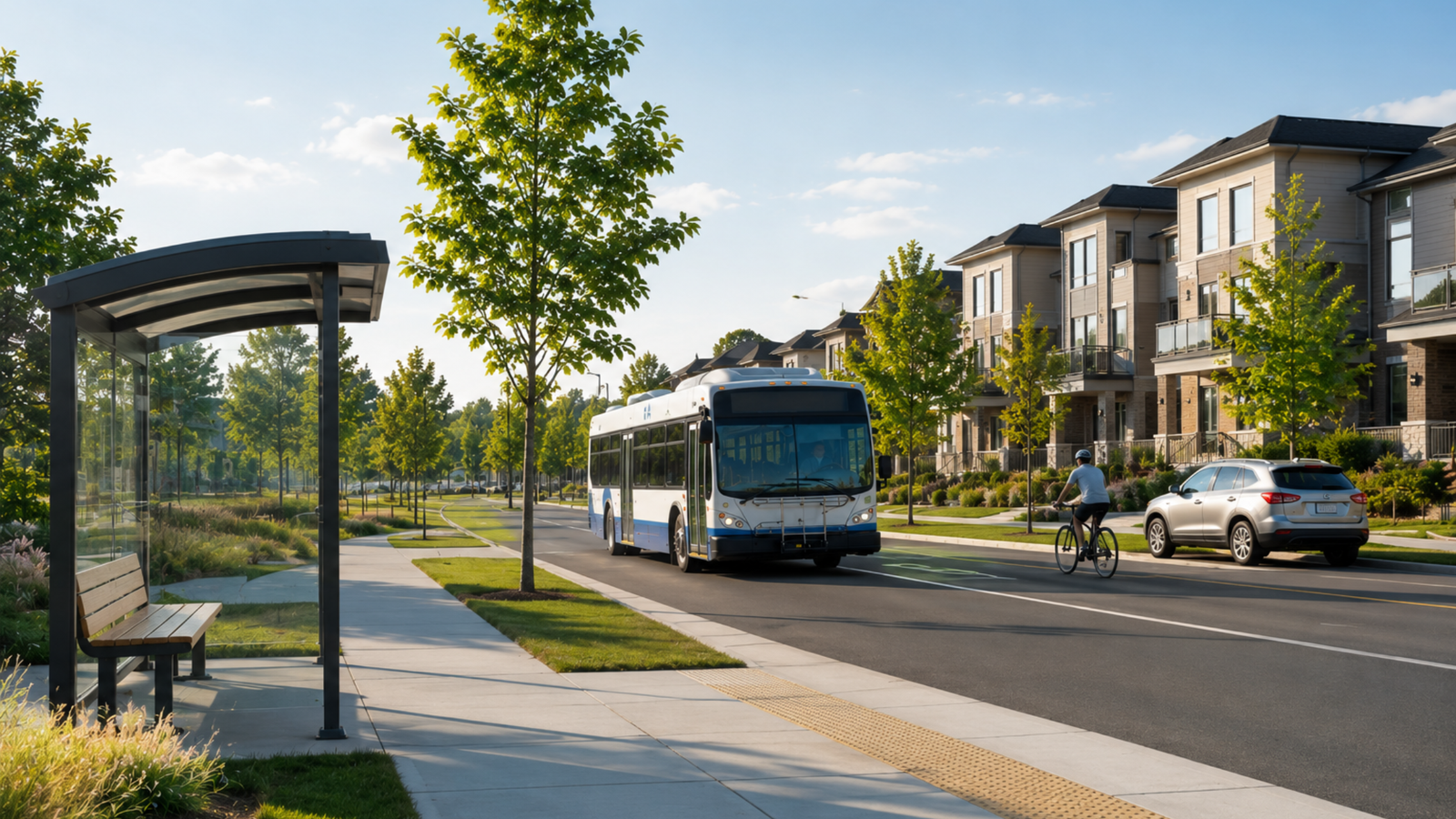
A home may be your starting point, but the quality of everyday life is also shaped by how easily you can get beyond it. Getting to work, school, healthcare, shopping and recreation should not feel like a daily logistical challenge. As residential communities continue to grow, access to reliable and convenient transportation is becoming an increasingly important part of choosing where to live.
This is particularly relevant in growing areas such as North Oshawa, where new residential development is taking place alongside expanding amenities and transportation connections. Homeward Hills is located near major roadways, public transit and regional transportation options, giving residents practical connections within Oshawa, Durham Region and beyond.
What Does Accessible Transportation Mean?
Accessible transportation is about more than having a bus stop close to home. It means residents have practical ways to reach the destinations that matter to them, whether that involves commuting to work, getting children to school, attending appointments or travelling to shops and recreational facilities.
Different households also have different transportation needs. A professional may prioritise a convenient commute, while a family may be more concerned about school and activity-related travel. Older adults and people with disabilities may place greater importance on accessible public transit, safe pedestrian routes and specialised transportation services.
A community that supports multiple ways of getting around can therefore provide greater flexibility as residents’ lifestyles and circumstances change.
The Everyday Benefits of Accessible Transportation
Transportation directly affects how people manage their daily routines. When important destinations are easier to reach, residents can spend less time dealing with complicated journeys and have more flexibility in how they travel.
Some of the key benefits of accessible transportation include:
- Greater independence: Residents have more options for travelling without relying entirely on private vehicles or others.
- Easier commuting: Convenient transit and road connections can make regular journeys to work or school more manageable.
- Better access to essentials: Grocery stores, healthcare, education and other services can be easier to reach.
- More lifestyle flexibility: Residents can choose different transportation options depending on the purpose and distance of a trip.
- Stronger community participation: Easier mobility can make it simpler to access parks, recreation and community events.
These advantages can become even more noticeable as household needs evolve. A family might rely heavily on a vehicle when children are young, for example, but later need convenient transit options as teenagers begin travelling independently.
Public Transit Creates More Options
Reliable public transit gives residents an alternative to driving for some journeys. Oshawa is served by Durham Region Transit, while GO Transit provides train and bus services connecting the city with other parts of the Greater Toronto Area and surrounding communities. Oshawa also offers specialised DRT services for eligible residents with disabilities.
Durham Region Transit also provides connections to GO Transit, York Region Transit, the TTC and VIA Rail, creating links beyond the immediate neighbourhood.
This network gives households more choice. One resident may drive for a large grocery trip but take transit to work, while another household member may use public transportation to reach school or other activities.
Accessibility Supports More Inclusive Communities
Accessible transportation is not only important for people who require specialised services. Parents travelling with young children, older adults, people carrying groceries and anyone dealing with a temporary mobility limitation can also benefit from easier-to-navigate transportation systems and public spaces.
Ontario’s accessibility framework recognises the importance of removing barriers. Under the Accessibility for Ontarians with Disabilities Act (AODA), municipalities and other public-sector organisations providing transportation services have specific accessibility requirements, including provisions relating to accessible transportation services.
For modern residential planning, this means accessibility is not simply an additional feature. It contributes to how easily people can participate in everyday community life.
Why Transportation Should Influence Your Homebuying Decision
Buyers often compare new homes based on floor plans, lot sizes, finishes, schools, amenities and price. Location matters too, but transportation deserves closer attention.
Before choosing a community, consider:
- How long will your regular commute take?
- What public transit options are available?
- How easily can you reach major highways?
- Can household members access schools and amenities conveniently?
- How close are healthcare and shopping services?
- What options will you have if your household becomes less dependent on a car?
These questions can reveal practical differences between residential communities that may not be obvious from a property listing.
A home can have an appealing floor plan and attractive finishes, but its location determines how easily you can connect with the rest of your daily life.
Transportation and Connectivity at Homeward Hills
North Oshawa has become an important area for residential growth, with new communities developing alongside established amenities and transportation infrastructure. Homeward Hills is a master-planned community offering freehold townhomes and detached homes in North Oshawa. Its location is close to Highway 407, while Highway 418 provides a connection towards Highway 401.
The community also provides access to Durham Region Transit and the Oshawa GO Station. The City of Oshawa confirms that residents have access to DRT, GO Transit and VIA Rail, alongside major highways including Highways 401 and 407.
For commuters, these connections can make regional travel more practical. For families, access to different transportation options can make it easier to manage work, school, appointments, shopping and recreation.
For more information about the community and its location, explore Sorbara homeward hills
Transportation Can Support Long-Term Community Growth
Transportation does more than connect one destination to another. It can influence how communities develop and how easily residents connect with employment, education, healthcare, recreation and other services.
Oshawa’s broader transportation network demonstrates this relationship. Durham Region Transit connects with neighbouring transit systems, while GO Transit provides regional rail and bus connections. The city also provides specialised transit for eligible residents with disabilities.
For homebuyers, this highlights an important consideration: transportation can contribute to the long-term practicality of a neighbourhood. A community with multiple ways to reach important destinations may remain useful as household needs change.
Look Beyond the Front Door When Choosing a Home
Choosing a home means choosing more than a building. The surrounding transportation network, schools, parks, healthcare facilities, shopping areas and community amenities all influence how comfortably you can live there. The benefits of accessible transportation become especially important over time, giving residents greater independence, easier commutes and more flexibility as their needs change.
For buyers considering North Oshawa, Sorbara homeward hills offers an opportunity to explore new homes in a growing community where transportation and connectivity form part of the wider location advantage. When evaluating your next home, look beyond the front door and consider how easily the neighbourhood can connect you to the life you want to lead.